
Fiber Optic Splicing in Sacramento CA – Fusion Splicing & Fiber Repair
As a Telecommunications Contractor in Sacramento CA, we provide low-loss fusion splicing for single-mode and multimode fiber, from pigtail terminations in telecom rooms to outdoor splice closures and emergency repairs of cut fiber.
Every splice is a point where a fiber link can lose signal. A clean fusion splice adds almost nothing, while a poor one can push a backbone link past its loss budget. Our technicians splice with core-alignment fusion splicers, protect each splice in organized trays or sealed closures, and verify the results with OTDR traces you keep on file. California C-7 licensed (CSLB #[NUMBER]).
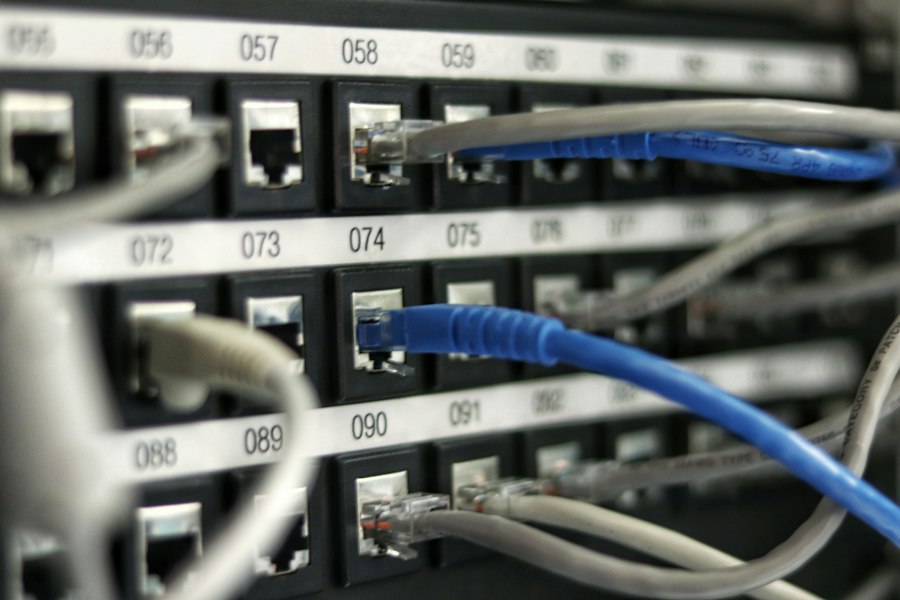
Fiber Optic Splicing Services in Sacramento CA
We splice fiber for new installations, extensions, repairs and upgrades. For new fiber backbone and building-to-building runs, see our Fiber Optic Cabling page.
Pigtail & Splice-On Termination
Factory-polished pigtails or splice-on connectors fused to each fiber for consistent, low-loss LC and SC terminations.
Mid-Span & Extension Splicing
Joining two cables to extend a run, reroute around construction or tap fibers from an existing cable.
Ribbon Fiber Splicing
Mass fusion splicing of ribbon cable, joining a full ribbon of fibers in one step for high-count backbone cables.
Cut Fiber Repair
Locating breaks caused by construction, rodents or crushed conduit, then splicing or replacing the damaged section.
Splice Closures & Panels
Sealed outdoor closures for vaults and handholes, and rack-mount splice panels and wall enclosures indoors.
Indoor/Outdoor Transitions
Splicing outside plant cable to indoor-rated cable at the building entrance, where code limits how far outdoor cable may run inside.
Fusion Splicing vs Mechanical Splicing in Sacramento CA
Both methods join two fibers end to end, but they perform very differently over the life of the link. We use fusion splicing for permanent work.
| Characteristic | Fusion splicing | Mechanical splicing |
|---|---|---|
| How it works | An electric arc welds the two fiber ends into one continuous strand | Fibers are held end to end in an alignment sleeve with index-matching gel |
| Typical loss | Very low, usually a small fraction of the allowed limit | Higher, and more variable from splice to splice |
| Reflection | Virtually none | Higher, which can affect some single-mode systems |
| Long-term stability | Permanent and stable over temperature changes | Gel can degrade over time and with temperature cycling |
| Best use | Backbone, single-mode, outside plant, permanent terminations | Temporary restoration or very small jobs |
TIA-568.3-D allows a maximum of 0.3 dB loss per splice. Every splice we make is measured against that limit.
What Goes Into a Low-Loss Fusion Splice in Sacramento CA
Fusion splicing looks simple, but splice quality depends on careful preparation. Dirt, a poor cleave or a damaged coating will all show up as loss on the OTDR. Our technicians follow the same steps on every fiber, whether it’s a 12-strand riser or a 144-strand campus backbone.
- Cable prepared and buffer tubes routed into the tray without tight bends
- Fiber coating stripped and the bare glass cleaned
- Precision cleave inspected for a flat, clean end face
- Fibers aligned by core in the fusion splicer
- Splice loss estimated by the splicer and re-made if out of range
- Heat-shrink protection sleeve applied over every splice
- Fibers organized in trays in color-code order and labeled
How We Test Fiber Splices in Sacramento CA
A splicer’s loss estimate is a useful first check, but it isn’t proof. We verify splices with an OTDR, which shows the loss at every splice and connector along the fiber.
Because OTDR splice readings can vary by direction, especially when joining fibers from different cables, we test in both directions on critical links and average the results for an accurate measurement. For full link certification, see Testing & Certification.
- OTDR trace for every spliced fiber, saved under its label
- Bidirectional testing on backbone and campus links
- Every splice compared with the 0.3 dB limit
- Out-of-tolerance splices re-made and re-tested
- Connector end faces inspected and cleaned before testing
- Tier 1 loss and length testing on finished links
- Splice map showing which fiber goes where
Fiber Splicing Problems We Fix in Sacramento CA
Fiber cut by construction
Excavation or remodeling can sever fiber. We locate the break with an OTDR and restore service.
High-loss links
Bad splices or old mechanical splices push links over budget. We find and re-make them.
Unorganized splice trays
Loose fibers and missing labels make changes risky. We re-tray, re-label and document.
Water in outdoor closures
Failed seals let water reach splices. We replace closures and re-splice damaged fibers.
Outdoor cable run too far inside
We splice to indoor-rated cable at the building entrance to meet code.
No splice records
We trace existing fibers and create a splice map so future work is straightforward.
Our Fiber Optic Splicing Process in Sacramento CA
Review fiber and scope
We confirm fiber type, strand count, splice locations and the loss budget for each link.
Prepare the site
We set up a clean splicing area at the rack, in the vault or in a splicing tent outdoors.
Prepare and cleave
Cables are stripped and fibers cleaned and cleaved to a precise end face.
Fusion splice
Fibers are core-aligned and fused, protected with heat-shrink sleeves and organized in trays.
Close and secure
Trays go into panels or sealed closures, and cables are secured and labeled.
Test and document
OTDR traces are captured for every fiber, and you receive the results and a splice map.
Fiber Optic Splicing FAQs in Sacramento CA
What is the difference between fusion and mechanical splicing?
Fusion splicing uses an electric arc to weld two fiber ends into one continuous strand, producing very low loss and almost no reflection. Mechanical splicing holds the fibers end to end in an alignment sleeve with index-matching gel. Mechanical splices are quicker for temporary repairs but have higher loss and reflection, so fusion splicing is the standard for permanent installations.
How much loss does a fiber splice add?
TIA-568.3-D allows up to 0.3 dB per splice. A good fusion splice is typically well below that. We measure every splice with an OTDR and re-splice any that are out of tolerance.
Can you repair fiber that has been cut?
Yes. We use an OTDR to find the exact distance to the break, then either splice the damaged section in a closure or replace it with a new length of cable spliced at both ends. Every repaired fiber is tested before service is restored.
Should we use spliced pigtails or field-installed connectors?
Fusion-spliced factory pigtails or splice-on connectors give the most consistent, lowest-loss terminations and are the best choice for backbone and single-mode links. Field-polished or mechanical connectors can work for smaller multimode jobs. We recommend the method based on your fiber type and loss budget.
Can different types of fiber be spliced together?
Fiber should be spliced to the same type. Single-mode cannot be spliced to multimode, and mixing multimode grades or core sizes adds loss that can cause links to fail. We confirm fiber types on both sides before splicing.
Request Fiber Optic Splicing in Sacramento CA
Tell us the fiber type, strand count and where the splices need to happen. For cut fiber, call us directly so we can schedule a repair.
Fiber down or new fiber to splice?
Whether it’s a planned termination or an unexpected cut, we will locate, splice and test the fiber and give you the results in writing.
(279) 206-4379 Request a Quote