
OTDR Testing & Certification in Sacramento CA – Fiber Optic Testing Services
As a Telecommunications Contractor in Sacramento CA, we provide Tier 1 and Tier 2 link verification that proves every strand meets its loss budget, with reflectometer traces that show exactly what is happening at each mated pair, joint and bend.
A fiber optic link can light up and still be close to failing. Loss testing measures how much signal each strand loses and compares it with what the network equipment can tolerate. Trace testing goes further, mapping every event along the cable so problems can be found and fixed before they cause an outage. We verify new installations, existing and dark strands across your infrastructure, and links that are causing trouble. California C-7 licensed (CSLB #[NUMBER]).
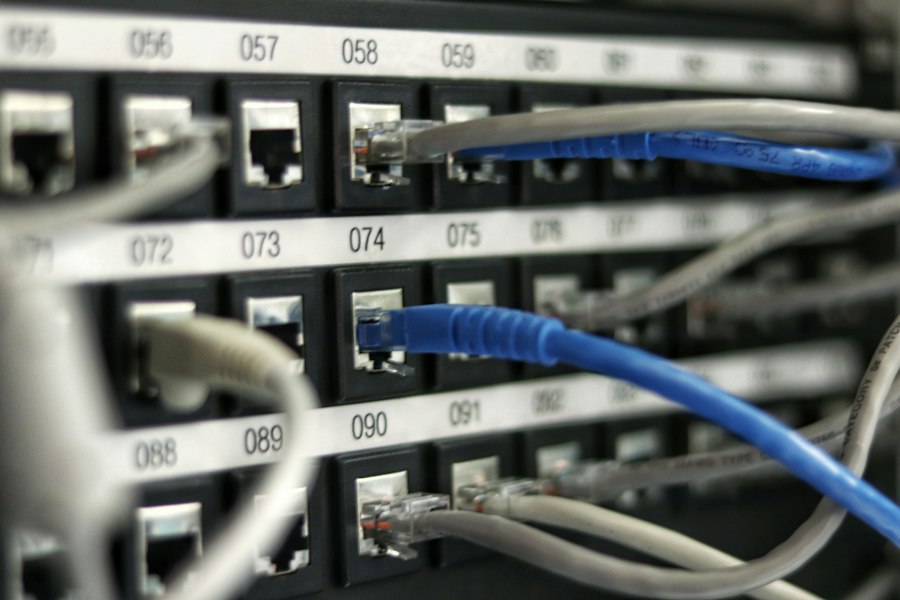
Acceptance, Audit & Diagnostic Services for Commercial Networks in Sacramento CA
Whether you are accepting a new backbone, buying or leasing dark strands, or chasing a link that keeps dropping, our team offers documented results you can rely on across a variety of communications infrastructure. For copper cable verification, see network cabling testing.
New Installation Acceptance
Tier 1 and Tier 2 verification of newly installed backbone, riser and campus cabling before it goes into service.
Dark & Existing Strand Audits
Checks of unused strands and cabling installed by others to confirm length, loss and condition before you rely on it.
Fault & Break Location
Reflectometer traces that pinpoint the distance to a break, bad joint or tight bend so repairs start in the right place.
Loss Budget Analysis
Calculating the allowed loss for each link and comparing it with measured results and your equipment’s limits.
Campus & Outside Plant Links
Long single-mode runs between buildings, through conduit and vaults, measured in both directions.
Documentation & Baselines
Saved trace files and PDF reports that serve as a baseline for comparison if a problem appears later.
Understanding Tier 1 and Tier 2 Levels in Sacramento CA
Link verification is done at two levels. Tier 1 proves a link passes. Tier 2 shows why it passes, or exactly where it doesn’t.
| Tier 1 (basic level) | Tier 2 (extended level) | |
|---|---|---|
| Equipment | Loss set (light source and power meter) | Time domain reflectometer (OTDR), in addition to Tier 1 |
| What it measures | Total link loss, length and polarity | Loss and reflectance of every mated pair, joint and bend along the cable |
| What it proves | The link is within its loss budget | Each component was installed correctly, and where any problem is |
| Finds faults? | Shows that a link fails, not where | Shows the distance to each fault |
| Best for | Every link | Backbone, campus and outside plant cabling, and warranty jobs |
Tier 1 testing is the basis for passing or failing a link. Tier 2 trace testing supplements it and does not replace it.
What a Reflectometer Trace Shows in Sacramento CA
A reflectometer works as a link analyzer. Optical pulses are sent down the optical cable, and the instrument measures what bounces back. The result is a trace that plots signal against distance. Each event along the cable shows up at its exact location, with its own loss value.
To see the terminations at both ends of your link, we use launch and receive cables, known lengths of cable added at each end. Without them, the first and last connectors are hidden in the instrument’s dead zone and never measured.
- Connectors: loss plus a reflective spike
- Fusion splices: a small step down with little or no reflection
- Tight bends: extra loss that is worse at longer wavelengths
- Breaks: a sharp end to the trace before the far end of the cable
- Attenuation: the gradual slope between events
- Total length: the distance to the far-end termination
How a Link Loss Budget Is Calculated in Sacramento CA
A loss budget is the maximum loss a link is allowed to have, based on its length and the number of connectors and splices. We calculate it for every link using the TIA-568.3-D certification standards values below, then compare it with the measured result.
| Component | Maximum allowed loss |
|---|---|
| Multimode at 850 nm | 3.5 dB per km |
| Multimode at 1300 nm | 1.5 dB per km |
| Single-mode inside plant (1310 / 1550 nm) | 1.0 dB per km |
| Single-mode outside plant (1310 / 1550 nm) | 0.5 dB per km |
| Mated connector pair | 0.75 dB |
| Fusion joint | 0.3 dB |
Example: a 300 m multimode backbone with a mated pair at each end has a budget at 850 nm of 0.3 km × 3.5 dB + 2 × 0.75 dB = 2.55 dB. The measured loss must be at or below that, and also within the limits of the Ethernet switches and transceivers that will use the link.
How We Keep Every Measurement Accurate in Sacramento CA
Results are only as good as the setup behind them. A bad reference or a dirty jumper can make a good link look bad, or hide a real problem. We follow the TIA reference and measurement methods on every job, backed by years of field experience.
- Reference jumpers inspected and cleaned before every reference
- One-cord reference method for Tier 1 loss testing
- Encircled flux compliant launch conditions for multimode
- Two wavelengths per cable type to reveal bend problems
- Bidirectional trace testing on spliced and long links
- Launch and receive cables on every trace
- Results saved under the same label as the physical strand and patch panel port
Problems We Find in Existing Cabling Infrastructure in Sacramento CA
Link over budget
The trace shows which mated pair or joint is adding the extra loss, so only that point is reworked.
Break inside conduit
We measure the distance to the break and match it to the cable route to find it in the field.
Tight bends in panels
Excess loss at 1550 nm compared with 1310 nm points to bends in trays, panels or conduit.
High reflectance
Dirty or damaged connectors show strong reflections. We clean or re-terminate them.
Unknown link length
Accurate length measurements help when ordering transceivers or planning extensions.
No access to existing records
When the existing cabling, fiber routes or panel labels were never documented, we create a baseline report for your infrastructure so future problems can be compared against known-good results.
Our Testing & Certification Process in Sacramento CA
Confirm scope and cable type
We confirm strand counts, cable types, link lengths and whether Tier 1, Tier 2 or both are required.
Calculate loss budgets
We calculate the allowed loss for each link based on its length, connectors and splices.
Inspect and set references
Connectors and reference jumpers are inspected and cleaned, and references are set.
Tier 1 loss, length and polarity
Each strand gets a loss, length and polarity test at two wavelengths.
Tier 2 trace capture
Traces are captured with launch and receive cables, in both directions where required.
Report and recommend
You receive the full report, trace files and recommendations for any strands that need attention.
OTDR Testing & Certification FAQs in Sacramento CA
Do I need Tier 1 or Tier 2 fiber testing?
Tier 1 testing measures total loss, length and polarity with a light source and power meter, and it is required to pass a link. Tier 2 adds a reflectometer trace that shows the loss of each mated pair and fusion joint along the link. We recommend Tier 2 for backbone, campus and outside plant cabling, and for any job where a manufacturer warranty or detailed records are required.
Why are launch and receive cables used during OTDR testing?
A reflectometer can’t accurately measure the first termination it is plugged into, and it can’t measure the last one without cable after it. Launch and receive cables add known lengths of cable at each end, so the terminations at both ends of your link appear clearly on the trace and are included in the results.
Can an OTDR find a fiber break?
Yes. A trace shows the distance along the cable to a break, bad joint or tight bend. We compare that distance with the cable route and as-built records to locate the fault in the field, then repair and recheck the strand.
Can you test existing or dark fiber?
Yes. We check unused (dark) strands and cabling installed by others to confirm their condition, length and loss before they are put into service, leased or used for a new connection. Live links carrying traffic are only checked after coordination with your IT team or carrier, so access to critical systems is never interrupted.
Which wavelengths do you test at?
Multimode is measured at 850 nm and 1300 nm, and single-mode at 1310 nm and 1550 nm. Testing at two wavelengths helps reveal problems such as tight bends, which show noticeably more loss at the longer wavelength.
Schedule Your Link Verification in Sacramento CA Today
Tell us the number of strands, cable type, approximate lengths and whether you need Tier 1, Tier 2 or help deciding. For an outage, call our Sacramento cabling team directly.
Need proof your links are up to spec?
From closeout testing, certification and documentation to tracking down a failing link, we will check every strand and give you clear, documented results that reflect real-world performance.
(279) 206-4379 Request a Quote