
Fiber Optic Installation in Sacramento CA | Licensed C-7 Fiber Contractor
As a Telecommunications Contractor in Sacramento CA, we place, splice, terminate and certify single-mode and multimode backbone cable for riser, campus and building-to-building links across the Greater Sacramento Area.
When your network outgrows copper, an optical backbone carries the load between telecom rooms, floors and buildings. As a Sacramento low voltage contractor, our crews pull indoor, riser, plenum and outdoor-rated cable, protect it in innerduct and cable tray, land it in rack-mount enclosures and test every strand before handoff. We hold a California C-7 Low Voltage Systems classification (CSLB #[NUMBER]) and deliver loss results and OTDR traces for every link we build.
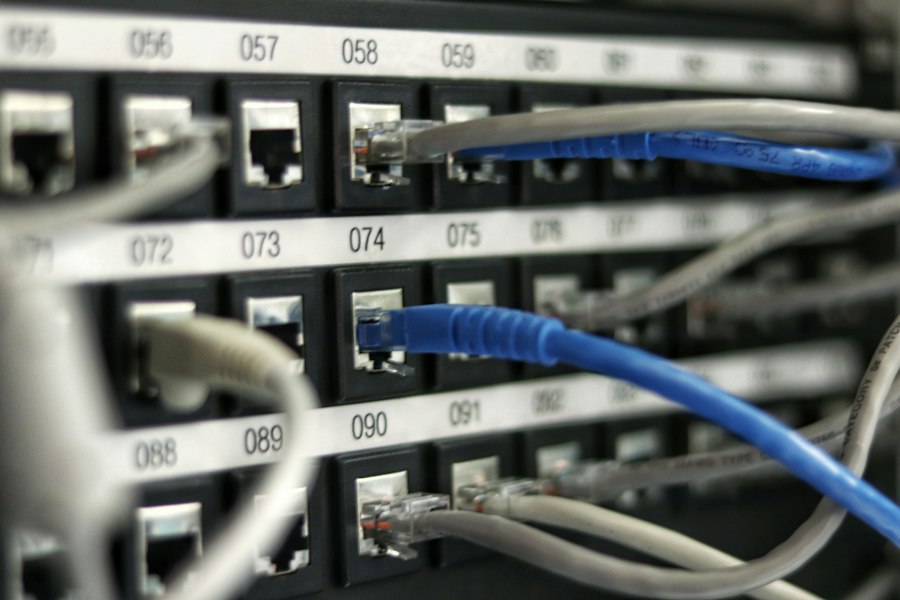
Commercial Fiber Optic Backbone in Sacramento CA
Optical fiber moves data as light rather than electrical signal, so it isn’t limited to the 100-meter channel that governs Cat6 and Cat6A copper network cabling, and it is immune to electromagnetic interference from motors, lighting and power feeds. That makes it the right medium for the links that tie a network together: the backbone between your main distribution frame (MDF) and each intermediate distribution frame (IDF), the riser between floors, and the run between buildings on a campus. It is the core of any modern data infrastructure.
A backbone installation is only as good as its pathway, its handling and its terminations. A cable pulled past its rated tension, bent tighter than its minimum radius or left unprotected in a crowded ceiling can pass on day one and fail later. We plan the route before we pull, use the correct cable rating for each space under California and local building codes, and finish every link with fusion-spliced or factory-terminated connectors and written test results.
Sacramento businesses bring us in for new construction, tenant improvements, office relocations, campus expansions and replacement of aging copper or legacy 62.5-micron multimode backbones in Sacramento, Roseville, Folsom, Elk Grove, Davis and surrounding communities. Because we also handle low voltage cabling for security cameras, access control, Wi-Fi and phone systems, the backbone can be planned alongside the rest of your low voltage systems by a single cabling contractor.
Hiring the right team matters. In California, a contractor performing low voltage wiring on commercial projects must hold the appropriate CSLB classification, typically C-7 Low Voltage Systems or C-10 Electrical. We are a professional C-7 contractor, so you do not need a general electrician to coordinate the work.
What Our Sacramento CA Backbone & Riser Projects Include
Every project is scoped to your building, but most fiber optic installations in Sacramento, CA include the following work in a single mobilization.
Backbone & Riser Cable
MDF-to-IDF and floor-to-floor backbone in riser-rated (OFNR) or plenum-rated (OFNP) cable, sized with spare strands for growth.
Building-to-Building Links
Outdoor loose-tube and armored cable pulled through conduit and innerduct between buildings, with indoor/outdoor transitions at each entrance.
Pathway & Protection
Innerduct, optical raceway, J-hooks and cable tray placed to keep glass separated from copper low voltage wiring and within its bend radius.
Enclosures & Patch Panels
Rack-mount and wall-mount enclosures, splice trays and LC or SC adapter panels mounted and dressed in your telecom rooms.
Splicing & Termination
Fusion-spliced pigtails, splice-on connectors and pre-terminated MPO/MTP trunks for high-density data center links.
Testing & Documentation
Tier 1 insertion loss on every strand, Tier 2 OTDR traces where specified, strand maps and TIA-606 labeling at both ends.
Single-Mode and Multimode Cable Types We Use in Sacramento CA
The right glass depends on distance, speed and the equipment on each end. We help you choose during the site walk so the optics you buy match the cable we place.
| Cable type | Core / wavelength | Typical reach at 10 Gbps | Best fit | Notes |
|---|---|---|---|---|
| OS2 single-mode | 9 µm, 1310 / 1550 nm | 10 km+ | Campus, building-to-building, carrier handoffs | Most headroom for 40G, 100G and beyond |
| OM4 multimode | 50 µm, 850 nm | 400 m | In-building MDF-to-IDF backbone | Lower-cost optics for short runs |
| OM5 multimode | 50 µm, 850–953 nm | 400 m | Data centers using shortwave WDM optics | Backward compatible with OM4 |
| OM3 multimode | 50 µm, 850 nm | 300 m | Expansions matching an existing OM3 plant | Generally not specified for new backbones |
Reach figures are typical IEEE 802.3 values for 10GBASE-SR (multimode) and 10GBASE-LR (single-mode). Actual reach depends on your optics, connector count and splice count, which is why we calculate a loss budget for each link.
Cable construction and ratings
- Tight-Buffered
- Loose-Tube
- Indoor/Outdoor
- Interlocking Armored
- Plenum (OFNP)
- Riser (OFNR)
- Micro Distribution
- MPO/MTP Trunks
Our Step-by-Step Fiber Installation Process in Sacramento CA
Site walk and route survey
We trace the pathway between rooms and buildings, check conduit fill and condition, and confirm strand counts, glass type and connector style.
Design and loss budget
We calculate the expected loss for each link from length, splices and connectors so you know it will support your optics before we pull.
Itemized quote and schedule
You receive a line-item price for cable, enclosures, labor and testing, plus a schedule that fits your occupancy or construction timeline.
Pathway and cable pull
We place innerduct and supports, then pull within the manufacturer’s tension limits while keeping the cable above its minimum bend radius.
Splicing and termination
Strands are fusion-spliced to pigtails or terminated with factory connectors, organized in splice trays and landed on labeled adapter panels.
Test, certify and hand off
Every strand is tested and documented. We walk the rooms with you and deliver test reports, strand maps and as-built records.
Optical Testing & Certification Standards in Sacramento CA
We test against the TIA-568.3-D component limits below, then compare each link to its calculated loss budget.
| Component | Maximum allowable loss | How we verify it |
|---|---|---|
| Mated connector pair | ≤0.75 dB | Tier 1 insertion loss (OLTS) and OTDR event table |
| Fusion splice | ≤0.3 dB | Splicer loss estimate, confirmed by bidirectional OTDR |
| Multimode cable | 3.5 dB/km at 850 nm, 1.5 dB/km at 1300 nm | Tier 1 insertion loss per strand |
| Single-mode cable (inside plant) | 1.0 dB/km at 1310 / 1550 nm | Tier 1 insertion loss per strand |
| Single-mode cable (outside plant) | 0.5 dB/km at 1310 / 1550 nm | Tier 1 loss + Tier 2 OTDR trace |
| End-face condition | Clean, no defects in the core zone | Inspection scope before every test and every connection |
Facilities We Serve in Sacramento CA and Across the Region
Offices
Multimode or single-mode backbone between the MDF and each floor’s IDF for tenant improvements, relocations and structured cabling installation projects in downtown Sacramento, CA.
Warehouses
Long optical runs to distant IDFs, wireless access points and security cameras where copper exceeds 100 meters.
Schools
Campus backbone linking classroom buildings, libraries and administration, plus the low voltage systems for bells, paging and security, scheduled around the academic calendar.
Medical Facilities
High-capacity backbone for imaging, records and nurse call systems, installed after hours with infection-control practices.
Retail
Backbone between stockrooms, offices and sales floors, supporting POS, security and smart building systems in large-format stores and shopping centers across Sacramento.
Industrial Facilities
Armored, interference-immune cable routed through conduit and tray near motors, drives and heavy equipment, feeding plant-floor data and connectivity solutions.
Fiber Optic Installation FAQs in Sacramento CA
Should I install single-mode or multimode fiber?
Multimode (OM4 or OM5) is usually the lower-cost choice for backbone runs inside one building, typically up to about 400 m at 10 Gbps. Single-mode (OS2) is the standard for campus, building-to-building and carrier links, and it gives the most headroom for future speed upgrades. Many new projects specify single-mode even for shorter runs for that reason.
How long does a fiber optic installation take?
A single MDF-to-IDF riser link is often placed, spliced and tested in one to two days. Multi-floor backbones and building-to-building runs take longer and depend on pathway access, conduit condition and the number of strands to be spliced. Your proposal includes a schedule for your specific scope, including any related cabling installation.
Can you install fiber after hours?
Yes. For occupied offices, medical facilities, schools and retail sites we can schedule pulls, splicing and cutovers in the evenings, on weekends or during school breaks to limit disruption to your network and security systems.
What documentation do I receive?
You receive Tier 1 insertion loss results for every strand, Tier 2 OTDR traces where specified, a strand map showing which strand lands on which port, and labeling consistent with the ANSI/TIA-606 administration standard. Professional documentation also makes future maintenance and moves far simpler.
Do you install fiber between buildings?
Yes. We pull outdoor-rated loose-tube and armored cable through existing conduit and innerduct between buildings, and transition it to indoor-rated cable at the building entrance as the electrical code requires. Where new underground conduit is needed, we coordinate that work as part of the project.
Hiring a Low Voltage Company in Sacramento CA? Request a Quote
Tell us where the backbone needs to go and what it needs to carry, from data, network and voice to security and smart building systems. We will walk the route and send an itemized quote with a loss budget for each link.
Ready to plan your new backbone?
Share your floor plans, strand count or existing fiber map if you have them, and we will schedule a site walk with a Sacramento low voltage cabling technician.
(279) 206-4379 Request an Estimate